
Searching Carroll County Criminal Dockets
Carroll County criminal dockets can be searched free through the Tyler Case Management Web Search. That is the public portal for Superior and State Court records. You can search by party, associated party, or case number. Party lookups need at least two letters. Type the last name first, then the first. A party search can also be narrowed by filing-date range, court code, and active or inactive status.
The case-number route tends to be more precise. It lets you enter court, year, sequence, case type, and status as separate fields on one Carroll County docket search form. The public Tyler landing page lays out those search options. It also carries a disclaimer about the accuracy of the court records it returns.
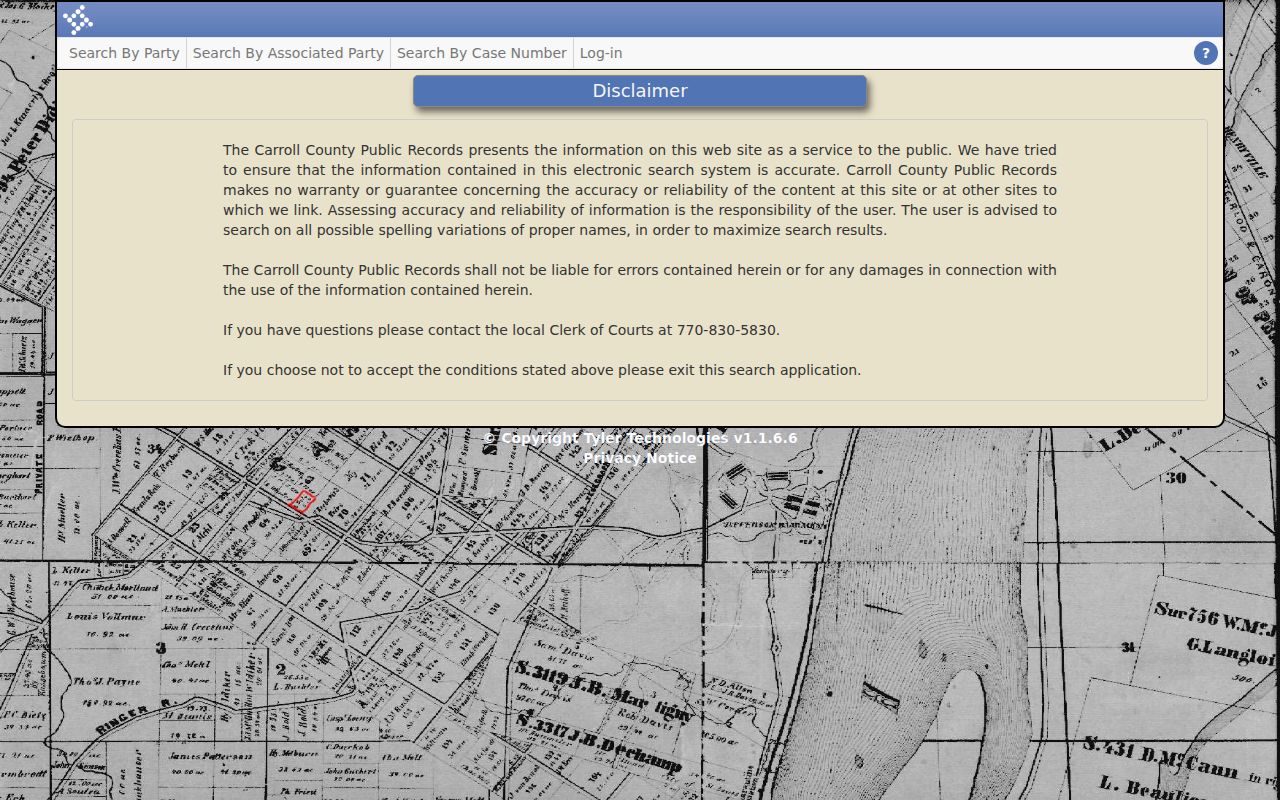
Keep the tool’s limits in mind. It is an index and lookup channel, not proof that every pleading, order, or image is available without contacting the clerk.
- Choose Superior Court for a felony or State Court for a misdemeanor or State Court traffic matter.
- Enter the exact case number if known; otherwise search Party or Associated Party with spelling variations and a date range.
- Use SU or ST for court and CR for criminal case type where those fields apply.
- Compare court, case number, status, events, and settings with information already known.
- Confirm a hearing on the official calendar and request a particular ordinary or certified document from the clerk.
Carroll Criminal Party Searches
Put a principal defendant or named party in the Party route. Someone tied to the matter in another role may surface through Associated Party. The Tyler Party search offers court, filing-date, and status filters.
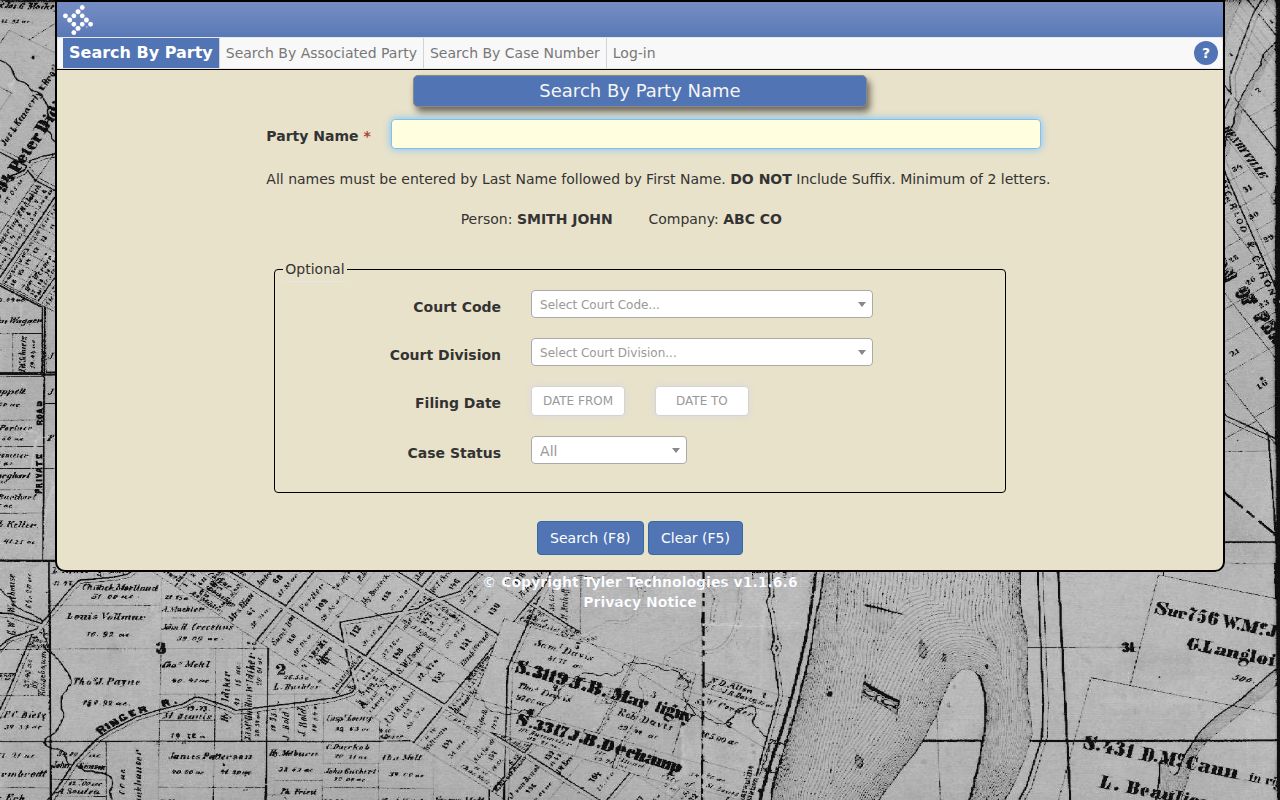
Names drive the form, not addresses or driver-license numbers. Its guidance is simple: omit a suffix, enter last name then first, and try spelling variations. The Associated Party search uses similar filters but targets a person connected with the case.
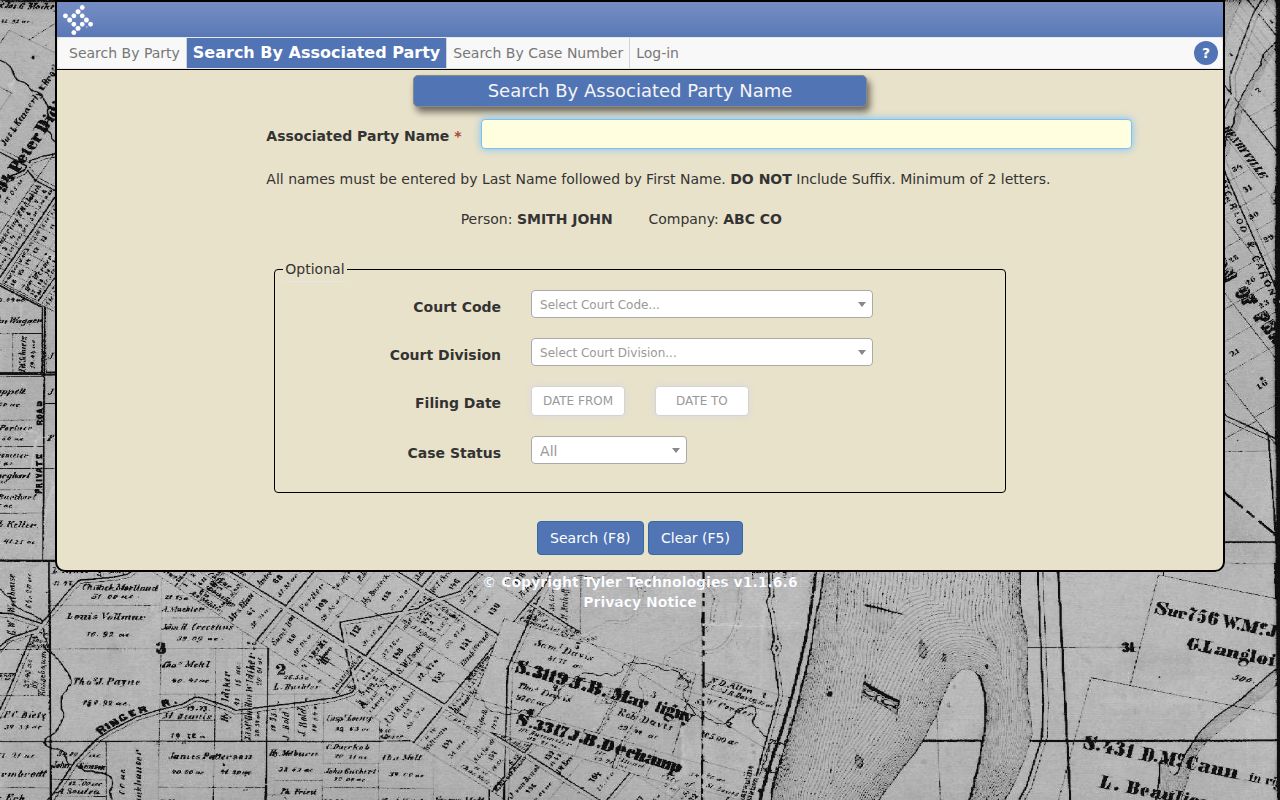
Both routes work better when you pick the known court and filing period. An “inactive” result is an administrative status only; it says nothing about guilt, dismissal, sentence, or legal effect.
Inside a Carroll County Criminal Docket
A Superior Criminal Calendar Call entry shows a lot at once. It lists court and calendar type, report and page numbers, date and time, presiding judge, case number, caption, count, offense or cause, attorney columns, and comments. A full docket can go further. It may record accusation or indictment, bond, arraignment, pleas, motions, calls, trial, verdict, sentencing, probation, VOP, warrants, and disposition. Event labels build the chronology. They still do not replace signed filings.
| Case number | A local identifier commonly combines year, SU or ST, CR, a sequence, and sometimes an assignment suffix. |
|---|---|
| Charge | An accusation, indictment, count, or offense describes a charging event; it is not a conviction. |
| Setting | Bond, arraignment, status, calendar call, bench trial, jury trial, or VOP identifies scheduled work. |
| Comments | A note may describe readiness, counsel, or scheduling but is not necessarily a ruling. |
| Disposition | An event may record dismissal, plea, verdict, sentence, or another resolution; verify it against the order. |
Carroll Calendar Call Is Not Trial
Superior Court labels range wide. They run from Motion for Bond and Arraignment to Criminal Non-Jury, Criminal Status Hearing, Criminal Calendar Call, Criminal Jury Trial, TPO, and VOP. State Court adds Criminal Motion/Bench Trial, Criminal Status Calendar, Peremptory Calendar, plea or arraignment, and jury settings. A calendar call manages readiness and scheduling. It does not mean evidence gets tried that day. A peremptory calendar pushes cases toward trial with limited continuance expectations.
Reading a posted PDF: a case can be continued, reassigned, amended, or removed after publication. Treat the latest PDF as a setting notice and confirm the operative date and appearance direction with the clerk or counsel.
How a Carroll Criminal Case Moves
Felonies generally move through Superior Court under the District Attorney. Misdemeanor accusations ordinarily go to State Court under the Solicitor. Before a felony reaches Superior, Magistrate may handle a warrant or preliminary hearing. The docket records what actually happened. It does not guarantee every case hits every possible step.
Docket flow: Warrant or Charge › Accusation or Indictment › Bond and Arraignment › Motions and Calendar Calls › Plea or Trial › Disposition and Possible Appeal
An accusation and an indictment are charging instruments. Neither one is a conviction. A disposition is a court event, not the same as an arrest. Many appeals go to the Georgia Court of Appeals, while reserved categories may go to the Supreme Court of Georgia.
Felony and Misdemeanor Dockets in Carroll
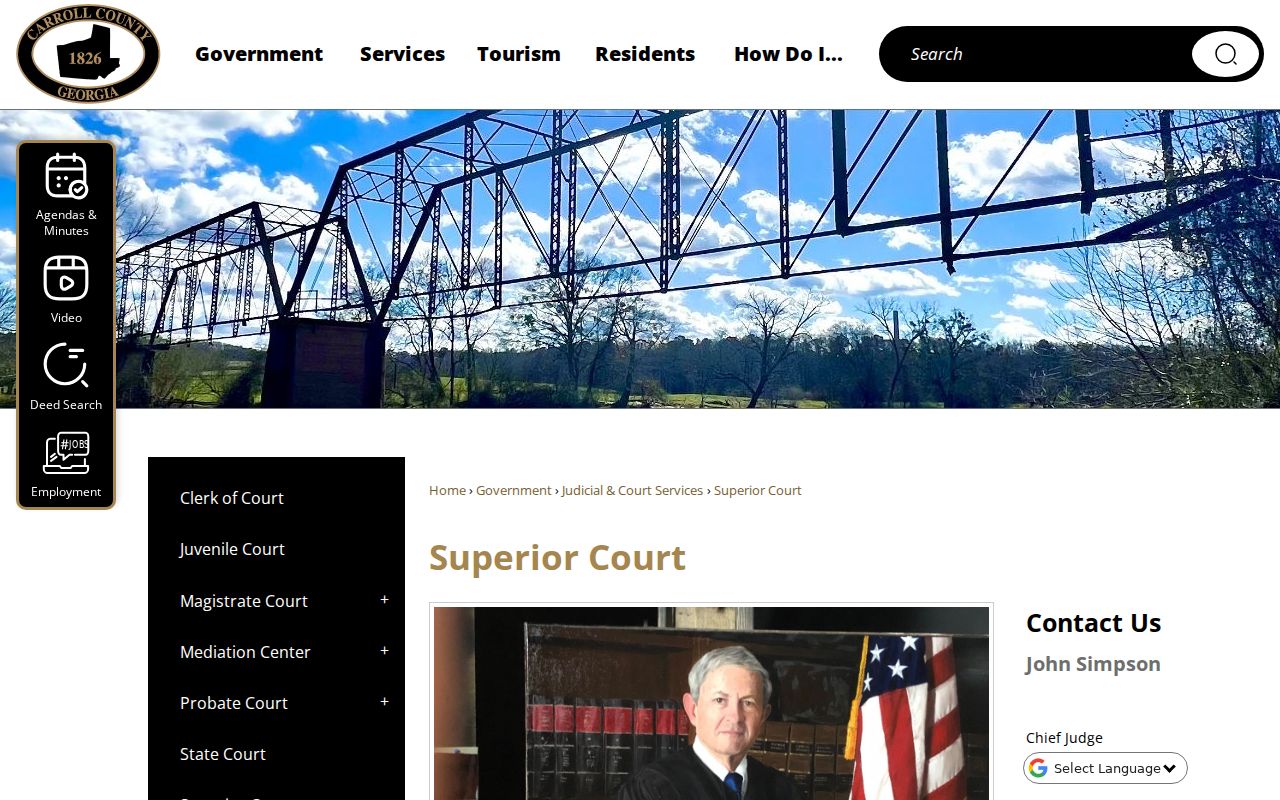
The Carroll Superior Court profile identifies the general-jurisdiction trial court. It also places the court within the West Georgia Judicial Circuit.
Superior receives felony cases accused or indicted by the District Attorney. State Court receives misdemeanor accusations from the Solicitor along with its own traffic offenses. Picking the wrong court can return an empty result. That can happen even when a public file exists. City traffic and ordinance matters stay with the issuing municipal court. They stay there unless they lawfully reach a county court. So a Carrollton citation should not be searched automatically as a State Court misdemeanor. The issuing court printed on the citation controls the first records route.
Carroll Magistrate Criminal Beginnings
The Carroll Magistrate Court page describes warrant, preliminary-hearing, minor criminal, and county-ordinance responsibilities.
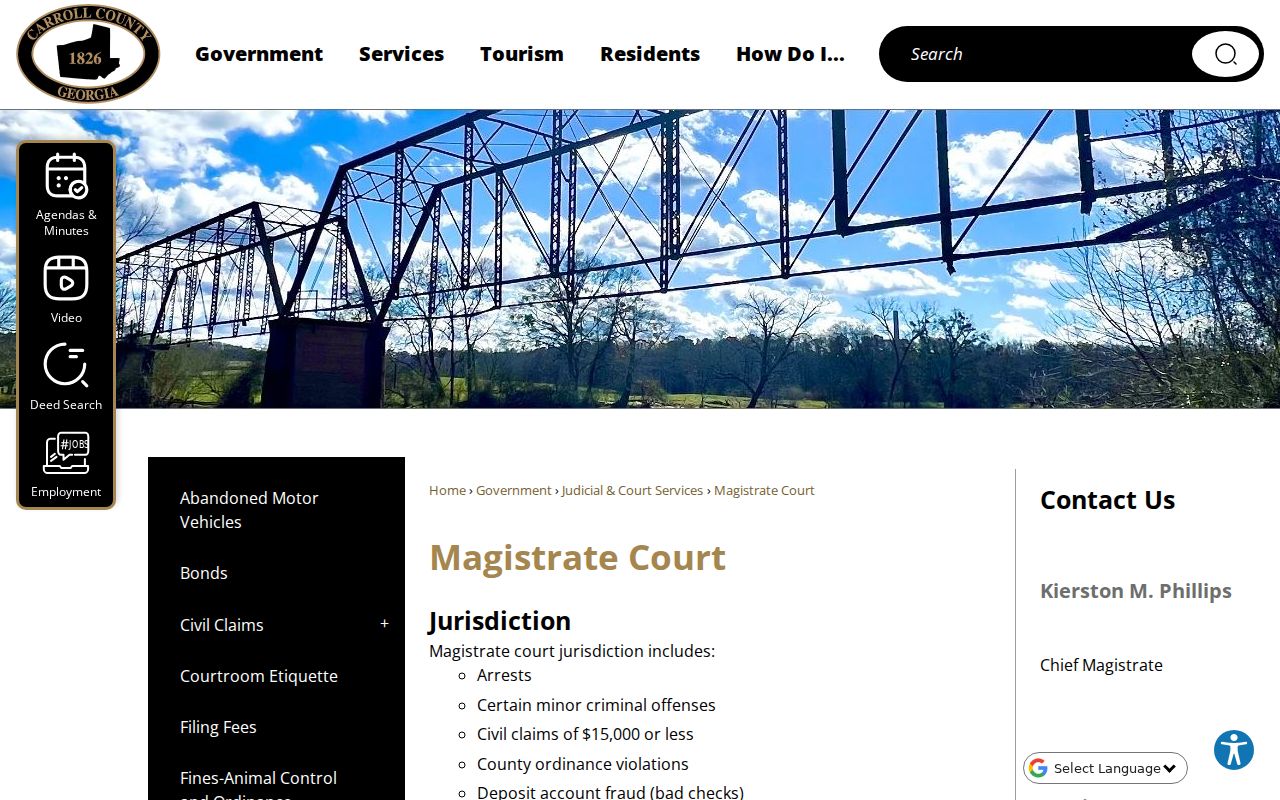
An early warrant may not appear in Tyler as a completed Superior case. Ask Magistrate about its record first. Check Superior once a felony has advanced. Juvenile delinquency runs in a separate, more confidential lane, so an adult index cannot support a “no juvenile matter” conclusion.
Courts That Hold Criminal Dockets
Use Tyler for the free Superior and State public index. Turn to Alan J. Lee, Clerk of Superior and State Courts, for a filed document or certified copy. The office sits at 311 Newnan Street, Carrollton, Georgia 30117, with mail to P.O. Box 1620. It answers at 770-830-5830 on weekdays from 8:00 a.m. to 5:00 p.m. When you call or write, be specific. Give the court, full case number, document label, filing date, certification choice, and delivery method. A city citation belongs with the municipal clerk. A warrant belongs with Magistrate or the office the county names. The county publishes no public-terminal location. So phone ahead before traveling. PeachCourt handles mandatory e-filing for Carroll Superior and State Courts. But an e-filing account is not unrestricted public access.
When a Carroll Criminal Case Is Missing
Start with the simple stuff. Check the spelling, the status filter, the court code, and the year. Also confirm the person sits under Party rather than Associated Party. The clerk’s calendars and orders can confirm a known setting when the docket search comes back empty. After that, call the division. Ask whether the case is newly filed, outside Tyler, or obtainable only through a document request. A blank result is not the whole story. The case might live in Municipal, Magistrate, or Juvenile court, or it may be restricted or sealed. That does not mean nothing happened. Keep in mind that the Georgia AOC criminal-data dashboard counts disposition transmissions by OTN. It is not a tool for finding a person. And it does not hold Carroll case files. When you ask for a copy, name one specific record rather than requesting a criminal-history summary the staff cannot build. Include the Carroll court division. Give the full case number, the exact document label, a rough filing date, your preferred delivery method, and whether you need certification. Ask for a cost estimate too. The clerk publishes no single fee table covering every Superior and State criminal document. If the image is not online, ask whether it can be inspected at the counter, pulled from storage, mailed, or sent another approved way. This detail matters. A charging instrument, an order, a sentence, a calendar notice, and a final disposition can all sit under the same Carroll criminal case number.
Carroll Criminal Copies and Certification
Finding a file in the public index is one thing. Getting a certified court record is another. Decide first whether a plain copy will do. Or decide whether the recipient insists on clerk certification. Then give the Superior or State division the full case number and name the exact item: an accusation, an indictment, a signed order, a sentence, or a disposition. One case can carry several similar event labels, so a docket date helps the clerk pull the right page instead of the wrong one. Before you send payment, ask the clerk to confirm current copy and certification charges, delivery options, and timing. Municipal citations and Magistrate warrants stay with those courts. They do not default to the Superior and State clerk.
Sealed Dockets and Public Access
Georgia presumes that court files are public, but the rule bends for certain orders, statutes, juvenile confidentiality, and protected identifiers. Anyone doing public research should avoid copying birth dates, addresses, driver-license data, children’s names, or allegations from sample records. And when a Carroll docket index lists an event but no image appears, ask the clerk what rule or order controls access.
Key Rules:
Georgia Open Records Act, O.C.G.A. §§ 50-18-70 through 50-18-76 — supports access to existing public records but does not require creation of a new report.
Uniform Superior Court Rule 21 — permits limited access through specified findings and procedures.
Uniform Superior Court Rule 21.6 — protects specified identifiers, including special treatment for protective-order information.